

 My Cart


Overview
Antibody production can be challenged by inherent complexities.

Single transmembrane
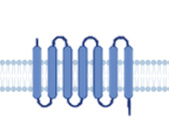
Multi-transmembrane

Membrane-anchored

Cytoplasmic

Others
The Sanyou Bio mRNA mAb Platform has abundant experiences on generating antibodies against a variety of protein targets ranging from cytoplasmic to membrane proteins. These include difficult-to-express targets including G protein-coupled receptors, ion channel proteins, integrins, TGF-β superfamily proteins, complement proteins, etc.


Case Study
1. Background of anti-CCR8 antibody
CCR8, a class A GPCR with seven transmembrane domains, is highly expressed on tumor-infiltrating Tregs but also present on Th2 cells, innate lymphoid cells, skin-resident memory T cells, dendritic cells, and eosinophils. In healthy adults, CCR8+ T cells are predominantly localized to the skin and are rarely detected in blood or intestinal tissues. Its primary ligand, CCL1, facilitates T-cell skin homing, Treg survival, and tumor chemotaxis. Due to its selective overexpression in tumor Tregs, CCR8 is an attractive therapeutic target for their depletion.
Currently, five anti-CCR8 antibodies are in clinical development globally, including the Phase II candidate LM-108—an ADCC-enhanced monoclonal antibody being evaluated for solid tumors such as non-small cell lung cancer. These antibodies exert their therapeutic effect by blocking CCL1 binding, thereby disrupting Treg recruitment and immunosuppressive activity to restore antitumor immunity. However, conventional antibody development has been hampered by challenges in producing CCR8’s complex native conformation through in vitro methods. mRNA-based antigen production offers a promising solution to this hurdle, enabling proper protein folding and presentation to generate high-quality, druggable antibodies for clinical translation.
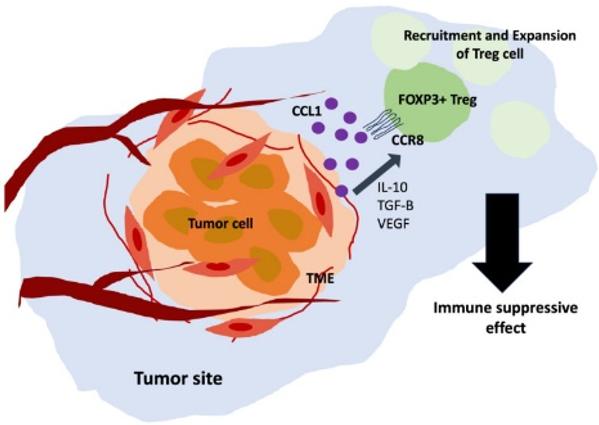
Fig. 1 Mechanisms of CCR8 leading to immunosuppression
From Kim N, et al.. CCR8 as a Therapeutic Novel Target: Omics-Integrated Comprehensive Analysis for Systematically Prioritizing Indications.
Biomedicines. 2023 Oct 27;11(11):2910.
2. Technical route for CCR8 mRNA preparation and antibody discovery
To generate anti-CCR8 antibodies, we first designed and synthesized a linearized plasmid for CCR8 mRNA in vitro transcription, followed by LNP packaging for in vivo delivery. Using this antigen, we constructed immune antibody libraries from immunized mice and alpacas, followed by 2–3 rounds of phage display panning to enrich CCR8-specific binders. Candidate antibodies were then validated in a eukaryotic expression system, yielding multiple lead molecules with confirmed in vitro activity against CCR8.The process is shown in Fig 2.

Fig. 2 Workflow of anti-CCR8 antibody discovery
3. Key results of anti-CCR8 antibody
3.1 CCR8 mRNA synthesis and quality analysis
Sanyou Bio pUC57-mRNA, a specialized plasmid designated for mRNA IVT transcription, has integrated the elements such as 5’UTR, 3’UTR, Poly A tails, and T7 promoter, all of which enhance the stability and efficiency for mRNA expression in vitro. In addition, Sanyou Bio mRNA transcripts must have gone through a comprehensive list of quality control rubrics (Result Section 1; also see Product QC under mRNA preparation for more details) to ensure a high quality delivery.
Result Section 1: Quality Tests of huCCR8-mRNA
Product | A260/A280 | A260/A230 | Endotoxin | dsRNA | T7 Polymerase | Capillary Electrophoresis |
|---|
huCCR8-mRNA | 2.20 | 2.52 | <10 EU/mg | <5% | <1% | 1501, 94.20% |
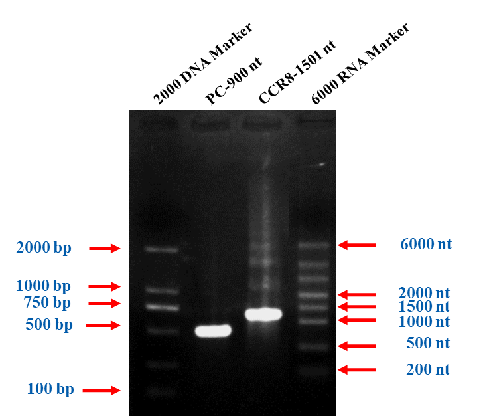
Fig. 3 The length of CCR8 mRNA products confirmed by agarose gel electrophoresis
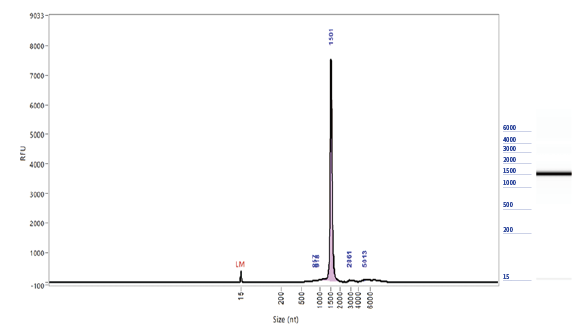
Fig. 4 The intactness of CCR8 mRNA products confirmed by capillary electrophoresis
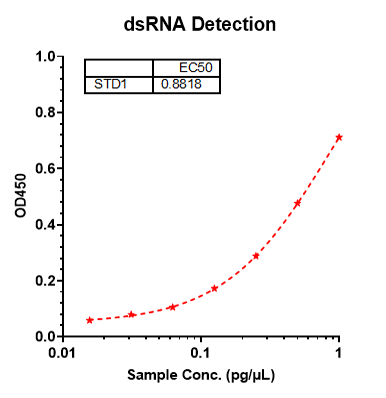
Fig. 5 dsRNA residues detected by ELISA
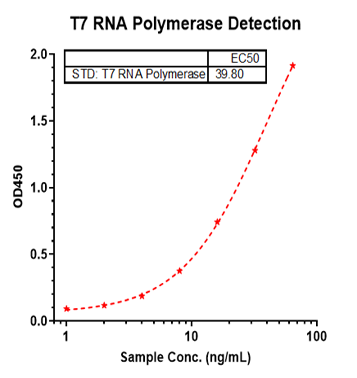
Fig. 6 T7 RNA polymerase concentration detected by ELISA
3.2 CCR8 mRNA LNP packaging and quality analysis
Prior studies demonstrated that SM-102 ionizable lipid nanoparticles (LNPs) significantly enhance in vivo antibody production efficiency while maintaining superior 4°C stability compared to alternative lipid formulations. Based on these advantages, we selected SM-102 for CCR8 mRNA encapsulation. Rigorous quality control testing (detailed in Section 2 and mRNA preparation Methods) confirmed the LNP formulation achieved exceptional encapsulation efficiency (>90%), demonstrating excellent potential for precise in vivo mRNA delivery in subsequent immunization protocols.
Result Section 2: Quality Tests of huCCR8-mRNA-LNP
Product | Polydispersity Index | Z-average Size | Encapsulation Efficiency | Final Payload Conc. |
|---|
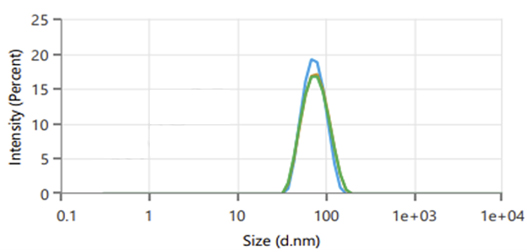
huCCR8-mRNA | 0.12 | 78.56nm | 96.83% | 0.386mg/mL |
1) Size distribution by intensity
2) Zeta potential distribution
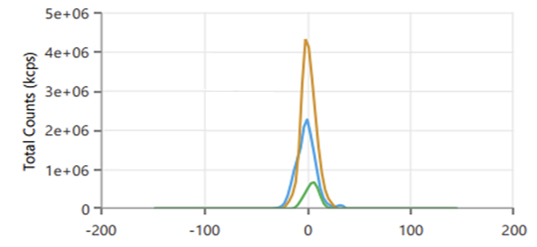
Fig .7 The size distribution and zeta potential of huCCR8 mRNA-LNP products
3.3 Anti-CCR8 antibody serum titer after huCCR8-mRNA-LNP immunization
mRNA immunization protocol employed a three-dose administration regimen to maximize immune response (Fig. 8). Serum analysis revealed robust anti-CCR8 antibody titers following huCCR8-mRNA-LNP immunization, demonstrating specific binding to CCR8-overexpressing HEK293 cells. No detectable binding was observed in wild-type HEK293 controls, confirming the immune response's specificity for CCR8. These results validate the huCCR8-mRNA-LNP platform's ability to generate target-specific antibodies while maintaining excellent antigen specificity.
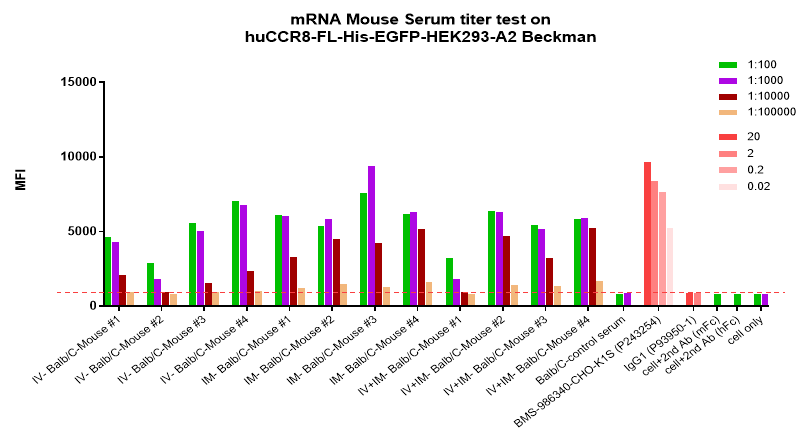
Fig. 8 Mouse serum titer after 3 doses of huCCR8-mRNA-LNP immunization via three different routes: IV, IM, and IV+IM; the binding of mouse serum with huCCR8-FL-His-EGFP-HEK293-A2 cells
was measured by FACS. IV, intravenous; IM, intramuscular; BMS-986340-CHO-K1S (P243254): reference antibody for huCCR8.
3.4 Case Summary
To overcome challenges in generating conformationally intact CCR8 for antibody discovery, we developed an huCCR8-mRNA-LNP formula using SM-102 lipid for efficient in vivo delivery of natively folded protein. This approach produced high-affinity anti-CCR8 antibodies—validated through rigorous CCR8-mRNA-LNP characterization (i.e. encapsulation efficiency>95%) and specific serum binding to huCCR8—establishing the Sanyou Bio mRNA-mAb platform as a transformative strategy for innovative therapeutic antibody development.

Overview
Antibody production can be challenged by inherent complexities.
Single transmembrane
Multi-transmembrane
Membrane-anchored
Cytoplasmic
Others
The Sanyou Bio mRNA mAb Platform has abundant experiences on generating antibodies against a variety of protein targets ranging from cytoplasmic to membrane proteins. These include difficult-to-express targets including G protein-coupled receptors, ion channel proteins, integrins, TGF-β superfamily proteins, complement proteins, etc.
Case Study
1. Background of anti-CCR8 antibody
CCR8, a class A GPCR with seven transmembrane domains, is highly expressed on tumor-infiltrating Tregs but also present on Th2 cells, innate lymphoid cells, skin-resident memory T cells, dendritic cells, and eosinophils. In healthy adults, CCR8+ T cells are predominantly localized to the skin and are rarely detected in blood or intestinal tissues. Its primary ligand, CCL1, facilitates T-cell skin homing, Treg survival, and tumor chemotaxis. Due to its selective overexpression in tumor Tregs, CCR8 is an attractive therapeutic target for their depletion.
Currently, five anti-CCR8 antibodies are in clinical development globally, including the Phase II candidate LM-108—an ADCC-enhanced monoclonal antibody being evaluated for solid tumors such as non-small cell lung cancer. These antibodies exert their therapeutic effect by blocking CCL1 binding, thereby disrupting Treg recruitment and immunosuppressive activity to restore antitumor immunity. However, conventional antibody development has been hampered by challenges in producing CCR8’s complex native conformation through in vitro methods. mRNA-based antigen production offers a promising solution to this hurdle, enabling proper protein folding and presentation to generate high-quality, druggable antibodies for clinical translation.
Fig. 1 Mechanisms of CCR8 leading to immunosuppression
From Kim N, et al.. CCR8 as a Therapeutic Novel Target: Omics-Integrated Comprehensive Analysis for Systematically Prioritizing Indications.
Biomedicines. 2023 Oct 27;11(11):2910.
2. Technical route for CCR8 mRNA preparation and antibody discovery
To generate anti-CCR8 antibodies, we first designed and synthesized a linearized plasmid for CCR8 mRNA in vitro transcription, followed by LNP packaging for in vivo delivery. Using this antigen, we constructed immune antibody libraries from immunized mice and alpacas, followed by 2–3 rounds of phage display panning to enrich CCR8-specific binders. Candidate antibodies were then validated in a eukaryotic expression system, yielding multiple lead molecules with confirmed in vitro activity against CCR8.The process is shown in Fig 2.
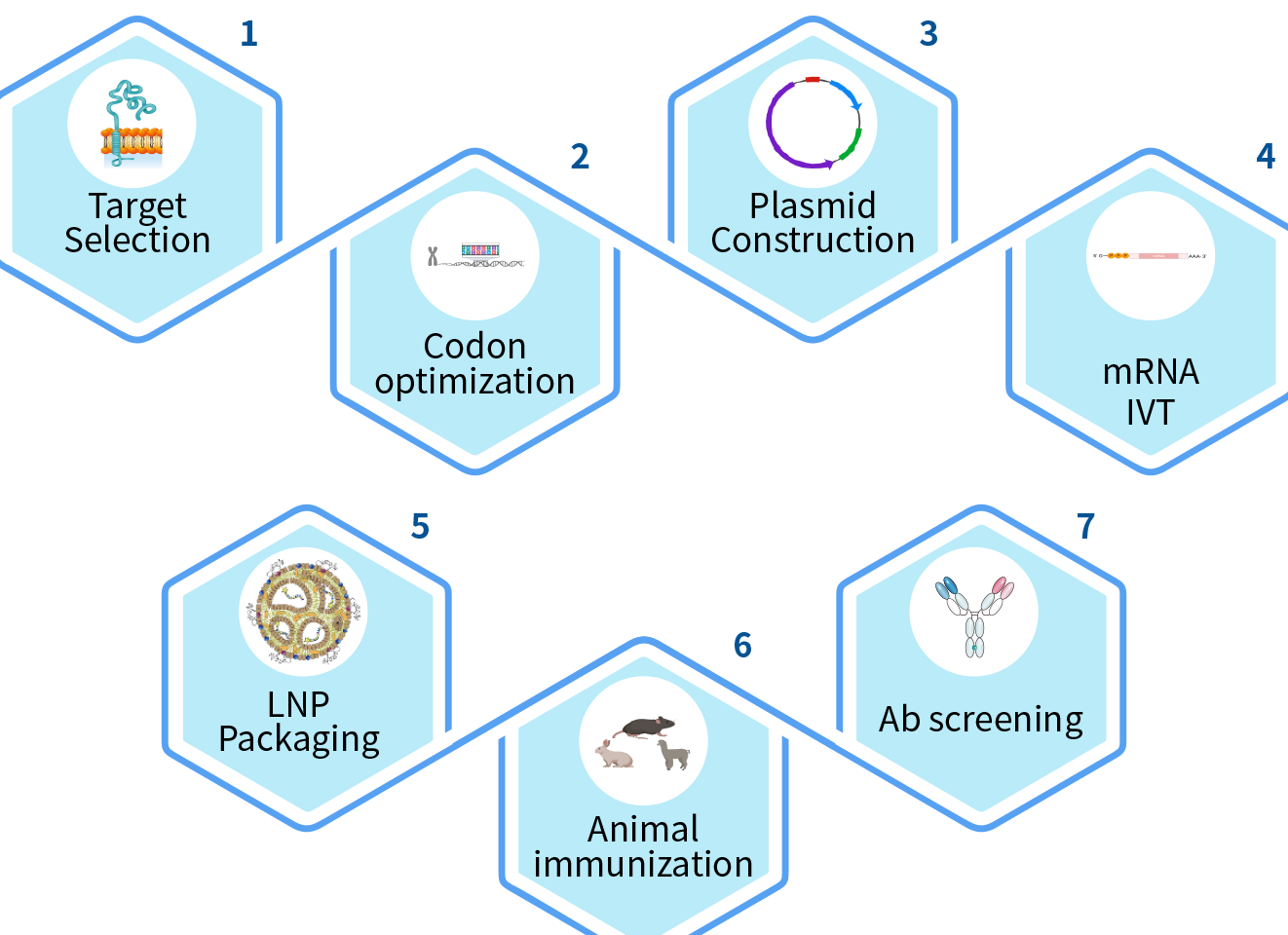
Fig. 2 Workflow of anti-CCR8 antibody discovery
3. Key results of anti-CCR8 antibody
3.1 CCR8 mRNA synthesis and quality analysis
Sanyou Bio pUC57-mRNA, a specialized plasmid designated for mRNA IVT transcription, has integrated the elements such as 5’UTR, 3’UTR, Poly A tails, and T7 promoter, all of which enhance the stability and efficiency for mRNA expression in vitro. In addition, Sanyou Bio mRNA transcripts must have gone through a comprehensive list of quality control rubrics (Result Section 1; also see Product QC under mRNA preparation for more details) to ensure a high quality delivery.
Result Section 1: Quality Tests of huCCR8-mRNA
Product | A260/A280 | A260/A230 | Endotoxin | dsRNA | T7 Polymerase | Capillary Electrophoresis |
|---|
huCCR8-mRNA | 2.20 | 2.52 | <10 EU/mg | <5% | <1% | 1501, 94.20% |
Fig. 3 The length of CCR8 mRNA products confirmed by agarose gel electrophoresis
Fig. 4 The intactness of CCR8 mRNA products confirmed by capillary electrophoresis
Fig. 5 dsRNA residues detected by ELISA
Fig. 6 T7 RNA polymerase concentration detected by ELISA
3.2 CCR8 mRNA LNP packaging and quality analysis
Prior studies demonstrated that SM-102 ionizable lipid nanoparticles (LNPs) significantly enhance in vivo antibody production efficiency while maintaining superior 4°C stability compared to alternative lipid formulations. Based on these advantages, we selected SM-102 for CCR8 mRNA encapsulation. Rigorous quality control testing (detailed in Section 2 and mRNA preparation Methods) confirmed the LNP formulation achieved exceptional encapsulation efficiency (>90%), demonstrating excellent potential for precise in vivo mRNA delivery in subsequent immunization protocols.
Result Section 2: Quality Tests of huCCR8-mRNA-LNP
Product | Polydispersity Index | Z-average Size | Encapsulation Efficiency | Final Payload Conc. |
|---|
huCCR8-mRNA | 0.12 | 78.56nm | 96.83% | 0.386mg/mL |
1) Size distribution by intensity
2) Zeta potential distribution
Fig .7 The size distribution and zeta potential of huCCR8 mRNA-LNP products
3.3 Anti-CCR8 antibody serum titer after huCCR8-mRNA-LNP immunization
mRNA immunization protocol employed a three-dose administration regimen to maximize immune response (Fig. 8). Serum analysis revealed robust anti-CCR8 antibody titers following huCCR8-mRNA-LNP immunization, demonstrating specific binding to CCR8-overexpressing HEK293 cells. No detectable binding was observed in wild-type HEK293 controls, confirming the immune response's specificity for CCR8. These results validate the huCCR8-mRNA-LNP platform's ability to generate target-specific antibodies while maintaining excellent antigen specificity.
Fig. 8 Mouse serum titer after 3 doses of huCCR8-mRNA-LNP immunization via three different routes: IV, IM, and IV+IM; the binding of mouse serum with huCCR8-FL-His-EGFP-HEK293-A2 cells was measured by FACS. IV, intravenous; IM, intramuscular; BMS-986340-CHO-K1S (P243254): reference antibody for huCCR8.
3.4 Case Summary
To overcome challenges in generating conformationally intact CCR8 for antibody discovery, we developed an huCCR8-mRNA-LNP formula using SM-102 lipid for efficient in vivo delivery of natively folded protein. This approach produced high-affinity anti-CCR8 antibodies—validated through rigorous CCR8-mRNA-LNP characterization (i.e. encapsulation efficiency>95%) and specific serum binding to huCCR8—establishing the Sanyou Bio mRNA-mAb platform as a transformative strategy for innovative therapeutic antibody development.